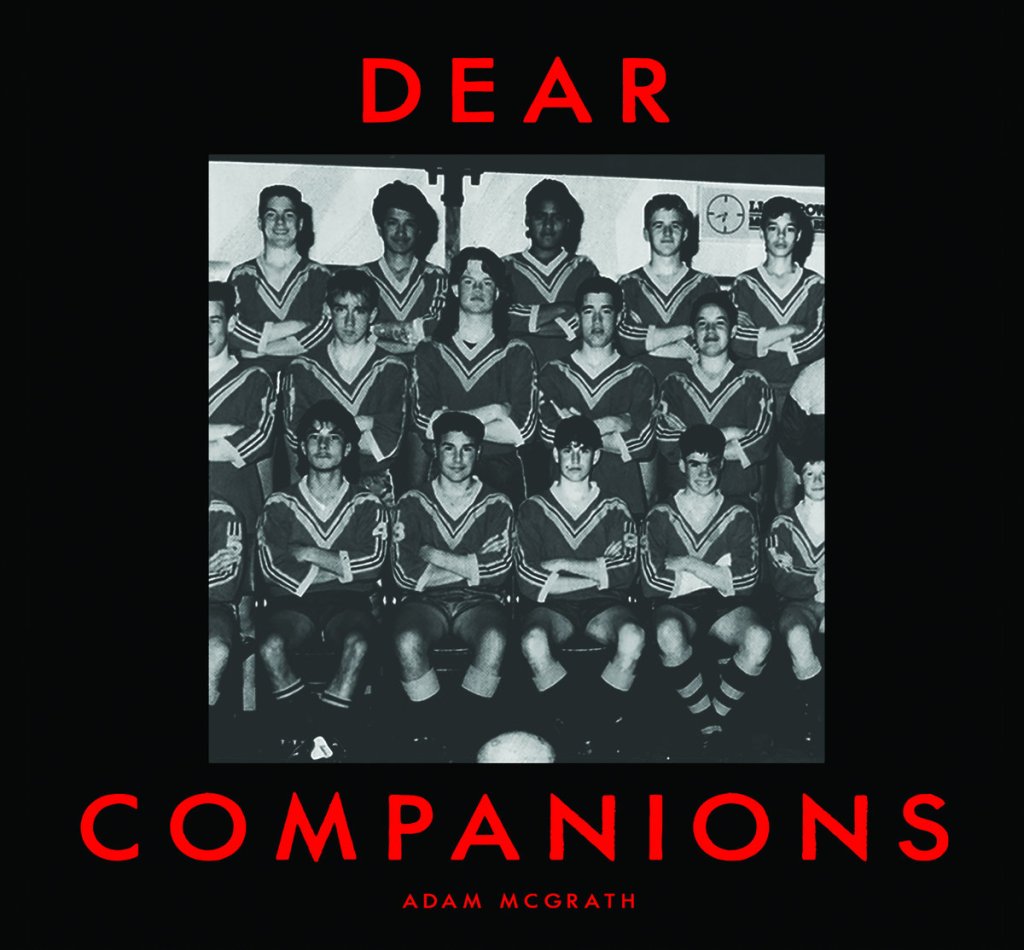
PTW is very pleased to have guest reviewer Heath Forsyth write this wonderful review of Adam McGrath’s Dear Companions, released late in 2022.
Adam McGrath
Dear Companions
Independent
What do you get for $10 these days? Schooner of Toohey’s New? Half a haircut? 500mb of phone data? How about a single iceberg lettuce to go with your cans of chilli tuna that you have lined up for your family dinners over the next two weekends?
In most cases, a tenner will not get you very far these days, not very far at all, however, one thing it will get you is a digital download of Adam McGrath’s debut solo record Dear Companions and along with it some hope for the future.
Adam McGrath is a Kiwi. A folk singer who has opened with and shared the stage with some of the world’s finest musicians such as Fleetwood Mac, Steve Earle, Old Crow Medicine Show, Paul Kelly and Jimmy Barnes to name a few. Since 2006, McGrath’s hardworking and hard-hitting outfit The Eastern, formed with banjo player Jess Shanks, has been writing, recording and touring extensively. The band usually plays onstage with one or two other players and sometimes can swell out to six or seven, they are also renowned for inviting musicians in the audience to join them on stage.
Following the earthquake in Christchurch in 2011 the band played free concerts all over the city, just one example of how their strong community focus has fostered a loyal fan base. It also helps to understand the intention and motivation for McGrath’s first solo album.
Currently, the record is only available on vinyl, CD and digital download, with no streaming. There’s a particularly special reason for this strategy though and this reason, dear companions, is as real as it gets.
The album was released in support of McGrath’s close friend Paul Higgins who was in need of ongoing treatment for cancer, and who sadly recently passed away. Paul’s Rough Peel label and music stores were a part of the journey of many New Zealand bands and artists over the past few decades including Marlon Williams and The Eastern. McGrath decided that Dear Companions wouldn’t be available for streaming as long as his friend required treatment, such examples of honest altruism is long dead from the mercenary nature of an industry that celebrates narcissism and greed as pointed out in ‘Royals’ by fellow New Zealander Lorde.
“It’s called Dear Companions, because of everything I’ve learnt or am learning about the people in the songs and what they help me learn about myself and about the world big and small (especially small). But that kind of conception is just how records start, where they end up is up to whoever gets a copy in their life.”
Produced by Lindon Puffin and created before the onset of COVID, Dear Companions is free from studio trickery or any obvious fast touches by hired guns. What you get is an album so sincere you’re literally swamped by the space of its own honest brutality. If you’re not left in tears by the end of it, you may need therapy.
I’m sure you’ll find your own personal subjective favourite tracks but for me, it was ‘The Great Society’ which tells the story of a childhood friend who reaches out to the singer/narrator for help coping with depression and suicide ideation. The story is tragically paralleled by the singer’s own father who suffered from memory loss due to having worked for years using hazardous chemicals to spray boats.
The question is asked in the refrain by the singer:
‘Now, who would have said
That a working man’s debt
Will be paid with the cost of the brain.’
It’s powerful in its intention. No one writes a lyric like that accidentally.
It alludes to the fact that the singer is torn that he/she cannot find the answers to the questions that the friend and father are asking. It also asks, who is responsible for the tragic and unjust circumstances that lead to a person’s demise? You would think in the modern age of WorkSafe regulation, AUS/NZ standards, contamination and toxicity guidelines that dangerous chemical substances and working conditions would be phased out.
With the recent news surrounding the silicosis crisis that is gripping the country, it seems that the art form of the song (and particularly the folk song) as a representative of the working man still has a place in contemporary culture. Some engineered stones used to make slabs or bench-tops contain up to 95 % crystalline silica, the dust from which is toxic. The agonising stories of the workers who cut the slabs are now coming to light, given months to live and being tethered to an oxygen tank in their final days.
Springsteen witnessed first-hand his father who had worked in various menial jobs such as a carpet factory, having to come to terms with the physical and mental trade-offs of blue-collar labour. It’s a recurring theme throughout much of Springsteen’s catalogue from his early days with songs such as ‘Factory’ and more recently ‘Jack of all Trades’ which appeared on the 2012 album Wrecking Ball.
In reality, likeness to Springsteen (or any such global musical icon) is unfair. McGrath exists as an immensely gifted songwriter in his own right with an incredible skill in being able to observe the world around him and articulate those observations musically and lyrically, much like contemporaries Paul Kelly, Josh Ritter, Mary Gauthier and Joe Pug. The world is big, be glad the internet allows you the privilege of discovering such insanely glorious artistry.
On ‘Splitter’s Woe’, a track I have been re-visiting more religiously than church:
“We can make a circle, circle makes a wheel,
Whole thing goes on forever, that’s the nature of the deal,
I have no understanding, understanding’s not for me,
The sun it goes on burning, the wheel is made for turning
Lift my hand above my brow, shade my eyes so I can see,
Like a soldier salute and rise, it’s the dying life for me.”
Dear Companions is a truly wonderful album I have enjoyed listening to immensely. It’s a kind of emotional defibrillator that will set you back into your life rhythm, and for an easy ten, that’s pretty bloody good.
by Heath Forsyth


